Rescue Scuba Diver
Learn to recognize, prevent, and respond to diving emergencies, for your buddy's sake and your own.
The NAUI Rescue Scuba Diver course, and its more demanding sibling, NAUI Advanced Rescue Scuba Diver, teach you to manage risk before it becomes an emergency, and to respond effectively when it does anyway. Most divers who take this course describe it as the point where they stopped thinking about their own skills in isolation and started thinking about their buddy team as a unit.
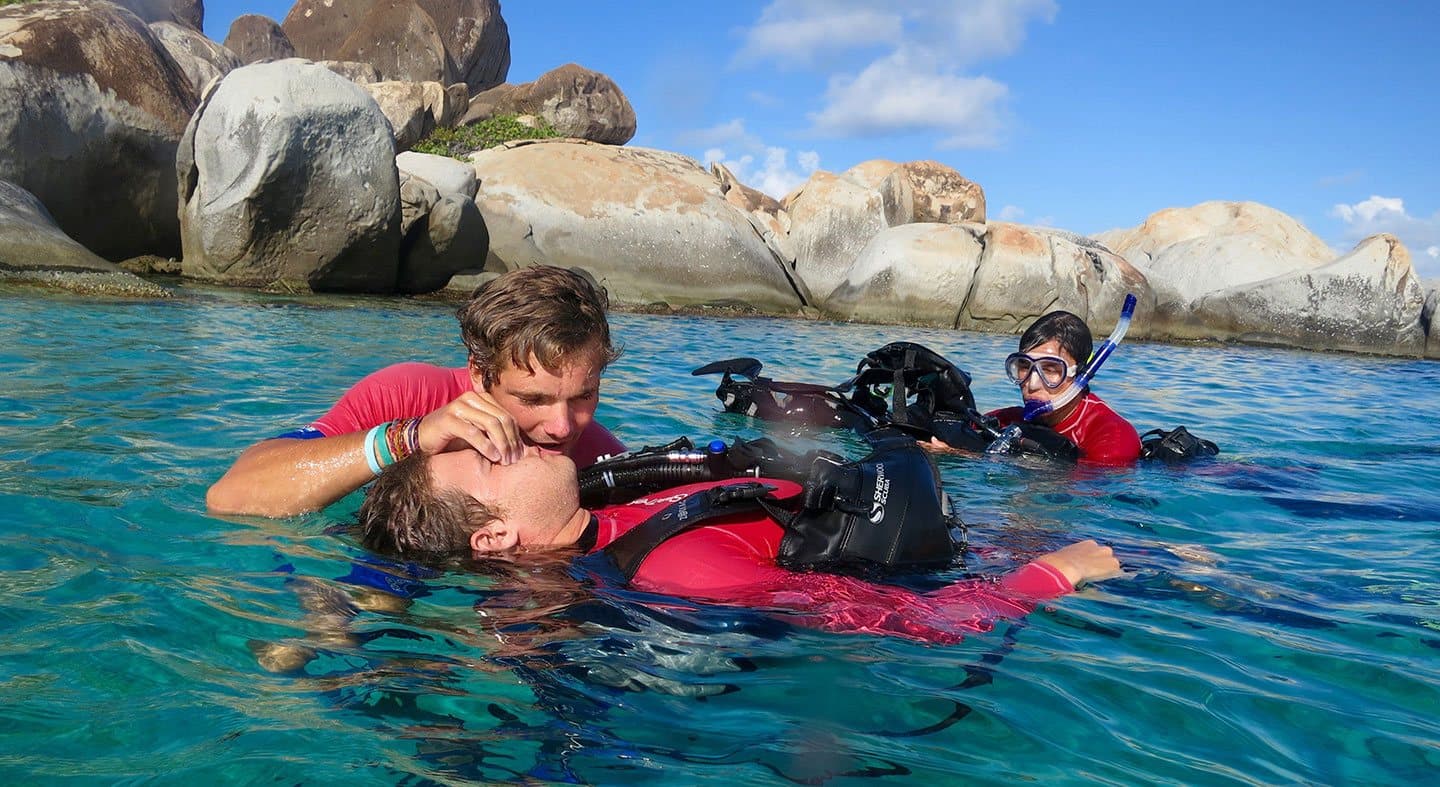
You will train to recognize the early warning signs of diver stress and panic, both in yourself and in others, well before they escalate. From there, the course builds through in-water problem management: assisting a struggling diver at the surface, towing and transport techniques, and both boat-based and shore-based rescues for skin and scuba divers.
CPR and First Aid certification are prerequisites, not something you pick up along the way, because rescue training assumes you can already manage the medical side competently and focuses your attention on the diving-specific parts of a real rescue: getting an unresponsive diver to the surface safely, managing your own air and buoyancy while doing it, and coordinating with other divers or surface support.
This course is also the practical starting point for anyone considering a NAUI leadership pathway. Rescue Diver training feeds directly into Assistant Instructor, Divemaster, and eventually Instructor certification.
Beyond the skills themselves, the Rescue card is a prerequisite waypoint: Master Scuba Diver electives draw on it, and every NAUI leadership rating, Assistant Instructor and Divemaster included, requires current rescue training. Most divers call it the most confidence-changing course they ever take.
What You’ll Learn
- Recognizing diver stress and panic before it escalates
- Surface rescue and tired- or panicked-diver assists
- Towing, transport, and exit techniques
- Rescues from depth for scuba and skin divers
- Boat-based and shore-based rescue scenarios
- Coordinating a rescue with buddy teams and surface support
What’s Next?
Rescue Scuba Diver training is a direct step toward becoming a NAUI Leader: continue into NAUI Master Scuba Diver, NAUI Assistant Instructor, or NAUI Divemaster.
Course Questions
Rescue, answered
The questions divers ask most before starting this course. Anything else, we’re one message away.
How physically demanding is the Rescue course?
It's honest work, towing, lifting, and managing scenarios in real water, but it's built progressively and taught at your pace. Reasonable fitness is enough; technique matters far more than strength.
Do I really need CPR and First Aid first?
Yes, current CPR and First Aid certification is a prerequisite, not part of the course. Rescue training assumes you can handle the medical side and focuses on the in-water problems: panicked divers, surface assists, and rescues from depth.
What ages can enroll?
Rescue Scuba Diver from 15, and the more demanding Advanced Rescue variant from 17. Both require an existing scuba certification.
Why do people call this the most important course?
Because it changes how you think. You stop seeing dives from inside your own mask and start reading your buddy, the conditions, and problems before they happen, and it's required for every NAUI leadership rating.
Continue Your Training
 Entry Level
Open Water Scuba Diver
Your first NAUI certification and the start of a lifetime of underwater exploration.
View Course Certified Diver
Advanced Scuba Diver
Six open-water dives that turn a certified diver into a confident, well-rounded one.
View Course Certified Diver
Enriched Air Nitrox (EANx) Diver
Longer bottom time, shorter surface intervals, and a better understanding of what you're breathing.
View Course